Homegrown Malaysian AI
- 29
- years in BPO and digital services
- 20+
- open models
- 40+
- open datasets
- 6
- models in the Nusa Voice Stack
Most voice AI was never built for a Malaysian phone call.
It arrives at 8 kHz, squeezed through a codec designed in the 1970s. The caller switches from Malay to English to Hokkien inside a single sentence. They pause to think, and the agent talks over them.
On our Malaysian contact-centre test set, raw call audio transcribed by Whisper large-v3 gives the starting point below. Everything after it is what we built to fix it.
71.48%
Character error rate, raw 8 kHz call audio
Malaysian contact-centre corpus, held outMeasured Source(opens in a new tab)
Raw 8 kHz call audio, before any of the models on this page touch it.
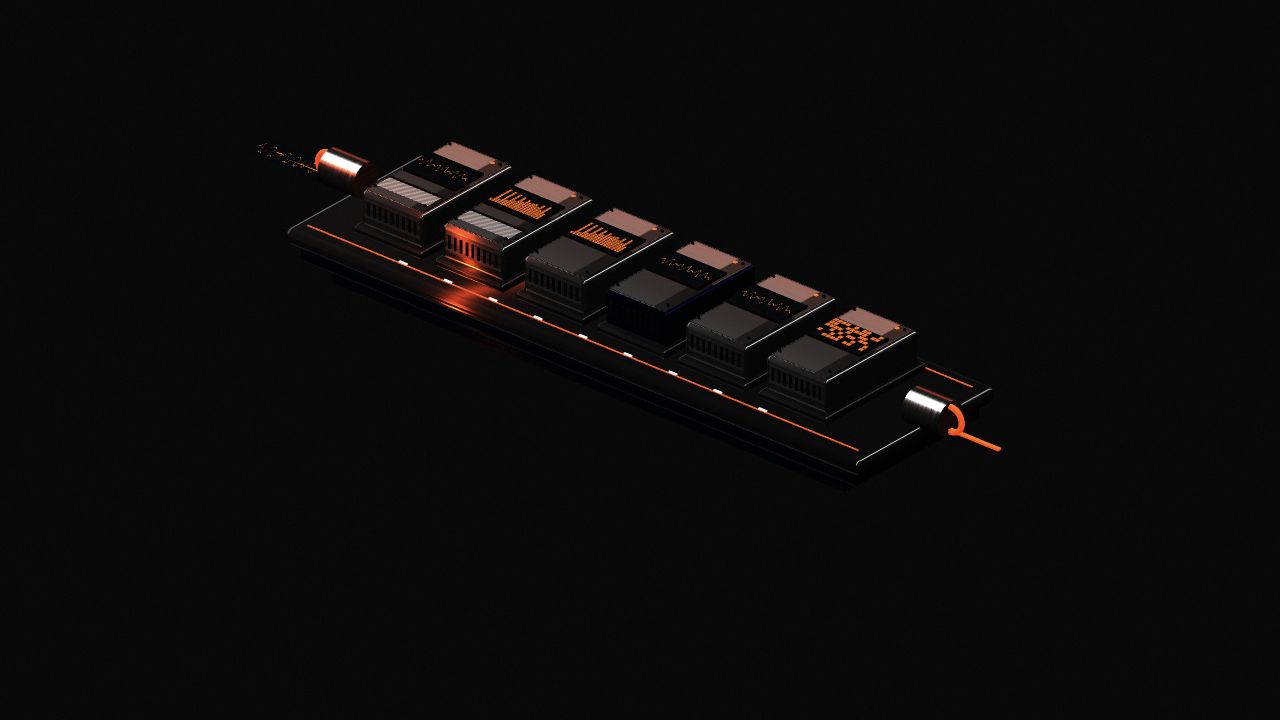
Scicom's Nusa Voice Stack: six models we built.
- caller audio, 8 kHz
- agent audio, out
Nusa Voice Stack is six models covering the voice path from caller audio to agent audio. Not an orchestration layer over other people's APIs. We trained the models ourselves, and some use pretrained encoders; every external dependency is named on its model card. When the data or the failure mode changes, we can retrain the model.
Select any model for its card, its benchmarks and its licence.
External dependencies across the pipeline: w2v-BERT 2.0, Whisper, Qwen3, DistilHuBERT, NeuCodec, DAC.
Get these wrong and the caller hangs up.
Hear the caller, not the phone line
Nusa Enhance takes 8 kHz telephony audio and outputs it at 48 kHz before transcription. The small model is downloadable; the larger enterprise model is licensed instead.
Every system below was run on the same held-out contact-centre set and scored the same way, including the open restoration models we did not build.
19.01%
Character error rate, enterprise enhancement model
Malaysian contact-centre corpus, held outMeasured Source(opens in a new tab)
Character error rate after the enterprise enhancement model, down from 71.48 % on the raw call audio.
| System | Character error rate (%) |
|---|---|
| Nusa Enhance, enterprise — Scicom | 19.01% |
| Nusa Enhance Small — Scicom | 38.91% |
| sidon-v0.1 | 41.06% |
| resemble-enhance | 54.96% |
| voicefixer | 58.27% |
| Raw 8 kHz call audio, no processing | 71.48% |
Stop interrupting people
The problem is deciding when a caller has actually finished speaking, not simply detecting silence. Nusa VAD reads the last eight seconds of audio and decides whether the caller is finished, with no transcript, on a single CPU thread.
20.0%
False cutoff rate at a 0.6 s budget
300 recorded Malaysian telephony turnsMeasured Source(opens in a new tab)
How often the enterprise model cuts a caller off at a 0.6 second budget. Lower is better.
| System | False cutoff rate (%) |
|---|---|
| Nusa VAD, enterprise — Scicom | 20.0% |
| Nusa VAD, downloadable — Scicom | 22.1% |
| LiveKit cloud detector — LiveKit | 27.8% |
Sound like a person, in any language
One TTS model, 76 evaluated languages, any speaker in the set, with delivery controlled by a written description.
Systems covering fewer languages score higher over their own subsets, so this comparison holds only at 76-language coverage.
3.233
Predicted naturalness across 76 languages
76 evaluated languagesMeasured Source(opens in a new tab)
Predicted naturalness across all 76 evaluated languages. Higher is better.
| System | faster-UTMOSv2 |
|---|---|
| Nusa TTS — Scicom | 3.233 |
| Fish Audio S2 Pro — Fish Audio | 2.9698 |
| Orpheus | 2.7267 |
| Dia | 1.8575 |
In production at TM.
At TM, we built the models, deployed them into the contact centre, and run them there.
Deployment is phased. The results below are measured in the next phase, and we will publish them when they exist.
- 1B+
- tokens served, and counting
Call deflection rate in production at TM
Not yet measured — Deployment is phased. This is measured in the next phase and will be published when it exists.
Average handle time in production at TM
Not yet measured — Deployment is phased. This is measured in the next phase and will be published when it exists.
From bare metal to the live call.
Take one layer or all of them.
- Model training
- Post-training and fine-tuning on your data, in your domain.
- Infrastructure
- GPU clusters built and run, on NVIDIA or Ascend, on-premise or in your cloud.
- Tooling
- Cluster management, deployment and data pipeline consoles. The ones we run our own clusters with, open sourced.
- Serving
- OpenAI-compatible endpoints. Change the base URL and go.
- Orchestration
- Turn-taking, barge-in, function calling and tool use.
- Applications
- Omnichannel customer service across voice, chat and messaging.
- Integration
- Into your existing telephony, CRM and ticketing.
Two decades as a Malaysian BPO sits behind all of it. We are not an AI vendor learning how calls work.
Test it on your own audio this afternoon.
Download a model and run it against your own calls. Or send us a recording and we will run the whole pipeline on it.
Requests reach the team that built the models. We reply within one working day.
The datasets are open.
Forty datasets, open on Hugging Face. Malaysian, Chinese and Tamil conversational speech. Call-centre language switching. Turn-taking. Restored Common Voice and MLS.
We released these datasets before training the models above, so the data is independently available for inspection and reuse.
| Dataset | Rows | 30-day downloads |
|---|---|---|
| Multilingual-TTS-Voice-Conversion(opens in a new tab) | 96.2 M | 438 |
| Emilia-YODAS-Voice-Conversion(opens in a new tab) | 66.9 M | 1,330 |
| Malaysian-Emilia(opens in a new tab) | 21.1 M | 619 |
| Malaysian-Chinese-Emilia(opens in a new tab) | 21.0 M | 1,140 |
| semantic-vad-eot(opens in a new tab) | 15.4 M | 1,480 |